The Layer & Beam Weekly: What’s Hot in 3D Printing & Laser Engraving
Makers, fabricators, and workshop tinkerers—welcome to your weekly dispatch from the intersection of molten filament, photopolymer resins, and focused photon beams! This week has been an absolute sprint for rapid prototyping and micro-fabrication, with massive leaps in multi-tool hardware, intelligent slicing, and ultra-short-pulse lasers.
Here are the top stories shaping the makerverse this week:
1. The Tool-Changer Revolution Takes Center Stage
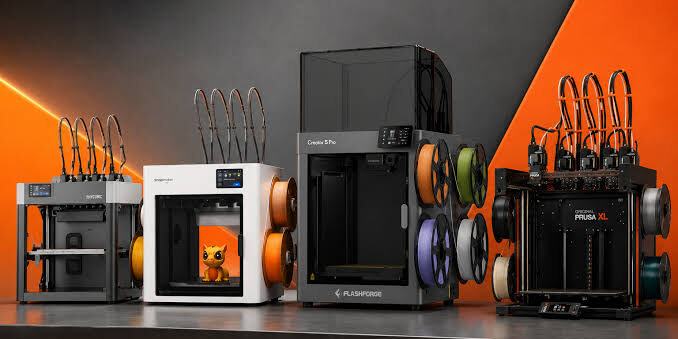
For years, multi-color and multi-material 3D printing meant choosing between wasteful purge towers or slow single-nozzle swaps. That era is rapidly ending. Between Bambu Lab’s launch of the H3C nine-tool changer and open-source tool-changing CoreXY designs maturing, workshop setups are shifting toward zero-waste, multi-material reliability. Whether you are bonding rigid structural chassis with flexible TPU hinge joints or laying down dissolvable PVA supports without a purge block, multi-head tool swapping is officially the standard to beat.
2. AI Generative Models Move From “Gimmick” to “G-Code”
Text-to-3D tools have historically output unprintable topology—non-manifold meshes with intersecting internal faces. The conversation took a sharp turn this week as AI modeling pipelines focused heavily on print-ready geometry. Updated agentic canvas workflows and tools like Meshy Edit allow creators to modify localized sections of 3D meshes and export clean, watertight STEP/STL files straight to the slicer. Pair that with real-time camera vision systems catching first-layer drifts before spaghetti happens, and failure rates are hitting historic lows.
3. Laser Engraving Embraces “Cold Ablation” & Dual-Source Modules
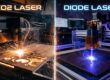
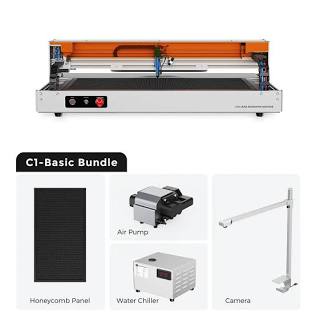
In the laser world, the biggest buzz centers around the proliferation of high-frequency pulsed systems. Ultra-fast femtosecond and picosecond laser technologies are shifting from high-end industrial labs into accessible desktop configurations. By vaporizing material via “cold ablation” before heat can conduct into adjacent areas, makers are engraving ultra-fine details (under 500 nanometers) without scorching charred edges on fragile acrylics, anodized alloys, or sensitive electronics. Combined with hybrid enclosures packing both 1064nm infrared fiber and 455nm blue diode sources, workshops can jump from etching slate coasters to engraving brass challenge coins without changing tools.
4. Formnext Preview & Large-Format Innovations
With major additive manufacturing expos right around the corner, industrial breakthroughs are trickling down. New reports highlight high-speed sintering (HSS), pellet-fed multi-color extrusion systems like Polymaker’s CymphoniK, and even titanium rocket engine components printed as unified assemblies. What starts on high-end aerospace beds tends to find its way into consumer slicers within months.
Project of the Week: The Dual-Craft Workflow
Ready to put both machines to work together? The standout trend on community forums this week is hybrid fabrication:
- The Base: Print structural organizers or light-diffusing enclosures in matte PETG with threaded brass heat-set inserts.
- The Accent: Precision-cut 3mm walnut veneer or frosted dual-layer acrylic on the laser bed.
- The Detail: Vector-engrave custom badges, serial plates, or custom logos for a production-grade finish that looks straight off an OEM assembly line.
Keep those beds leveled, your lenses wiped clean, and check back next Friday for another deep dive into the maker space!